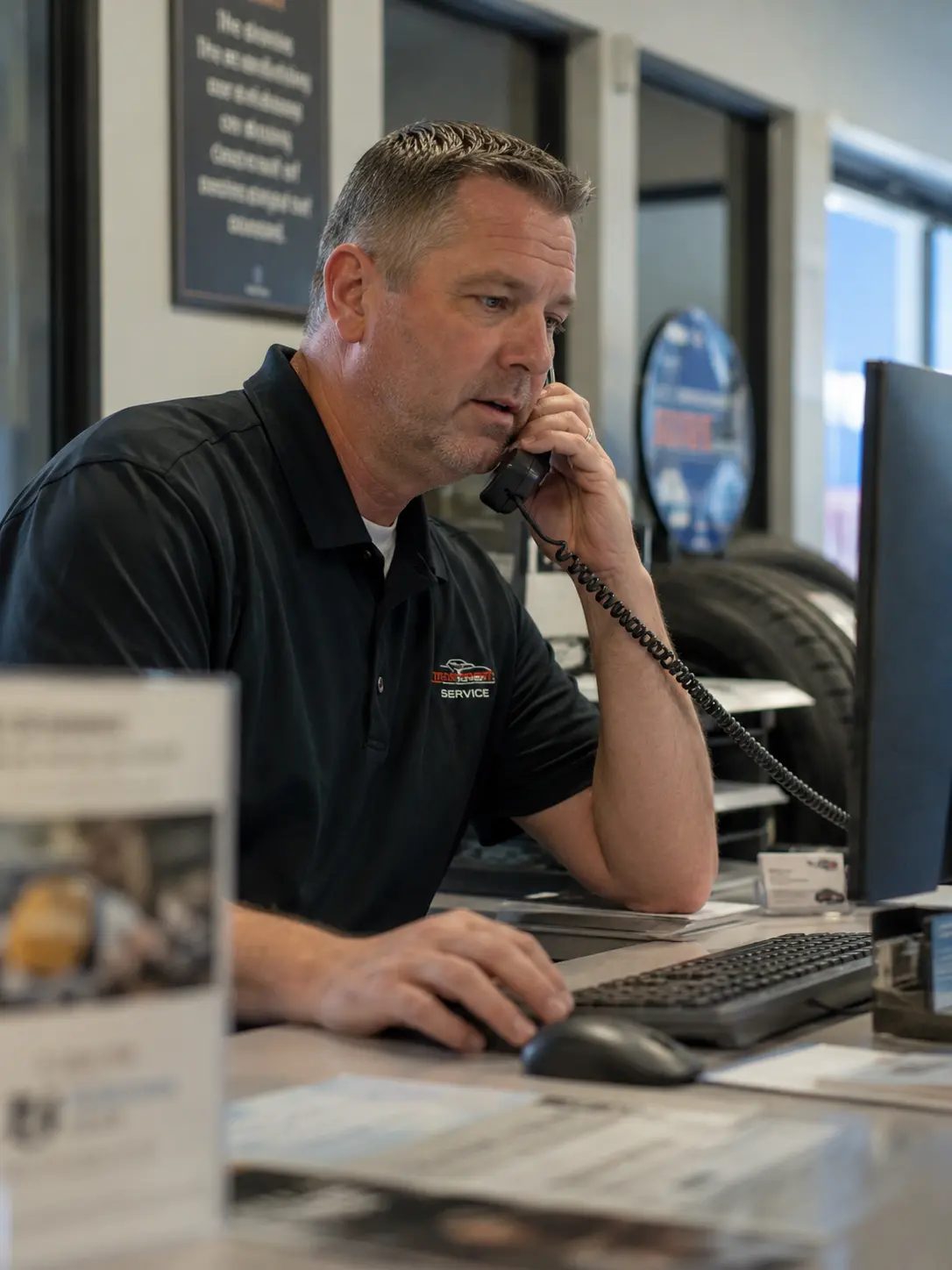
A dealership can answer its phone and still lose the call. The ring gets picked up, the caller says they are interested in a vehicle, and the conversation ends in a transfer that rings out, a hold that outlasts their patience, or a voicemail box that nobody checks until Monday. The call counts as answered. The caller never reached a salesperson.
How many callers never connect?
In a 2022 analysis of more than 60,000 consumer-to-dealer phone conversations, Marchex found that 16 percent of customers who call a dealership never connect to a sales representative (Marchex). That figure measures something different from the missed-call rate. These are calls that reached the building and still ended without a conversation with the person who could sell a car.
Most dealership reporting stops at "answered" versus "unanswered." A call picked up by the front desk and dropped during a transfer shows up as a success in that report. The connect gap is invisible unless someone tracks what happened after the pickup.
What happens to the callers who do get through
Connecting is only the first step. The same Marchex release reports that 40 percent of calls result in at least three breaches of trust, where the caller feels the agent is dismissive, not paying attention, or not taking the request seriously (Marchex). Among callers who ask about the availability of a specific make or model, 60 percent do not receive a clear response or a path to purchase.
Put those numbers together and the sales phone has two leaks in sequence. Some callers never reach a person. Of those who do, many hang up without a clear next step. Both leaks come from the same cause: the call depends on whoever happens to be free at that moment.
Where the connect gap comes from
Three patterns account for most of it:
- Transfers with no fallback. The front desk sends the call to a sales extension, nobody answers, and the call rolls to a general voicemail box.
- Hold with no end point. A caller waits while the sales team is on the floor with a customer, and hangs up before anyone returns.
- Shift gaps. Lunch, desk-duty rotations, and the half hour before close leave the sales line staffed on paper and empty in practice.
None of these is a performance problem with the people involved. They are coverage problems. A salesperson with a customer at the desk is doing the right thing, and the phone still rings.
What closes the gap
A call that reaches a sales line needs to produce one of two outcomes: a conversation with a person, or a captured record that a person acts on quickly. Everything else is a lost lead.
Uobo-Connect's sales call agent answers the call directly instead of relying on a transfer. It confirms the vehicle against live inventory, qualifies the buyer, captures trade details, and pushes a structured record to your CRM, with hot leads flagged for priority follow-up. If the caller needs a person, the handoff includes the full context, so the salesperson does not start from a blank slip. The same coverage applies during lunch, weekends, and after close (see the vehicle availability calls post for how the most common sales question gets answered).
What to check at your own store
Before assuming the sales phone is covered, test it:
- Place five calls to your sales line at different times of day and track how many reach a person within one minute.
- Pull your phone system report for calls that were answered but lasted under 30 seconds. Those are often failed transfers.
- Ask what happens to a call when the first extension does not pick up. If the answer is voicemail, the connect gap is yours.
If the numbers match Marchex's 16 percent, roughly one in six callers who wanted to talk to sales never did. That is the cheapest improvement in the building, because the demand already called.